
uPVC
- Does not rot in the way timber does
- Generally needs less routine painting
- Sections can be replaced without full redecoration
- Needs correct fixing to allow for movement
Roofing
Fascias, soffits and bargeboards form the visible edges of a roof. They carry the gutters, close off the eaves and protect the timbers behind. Here is how we assess them, and how uPVC replacements are fitted.
Recent work
White uPVC fascias, soffits and gutters fitted to the eaves of a range of homes.
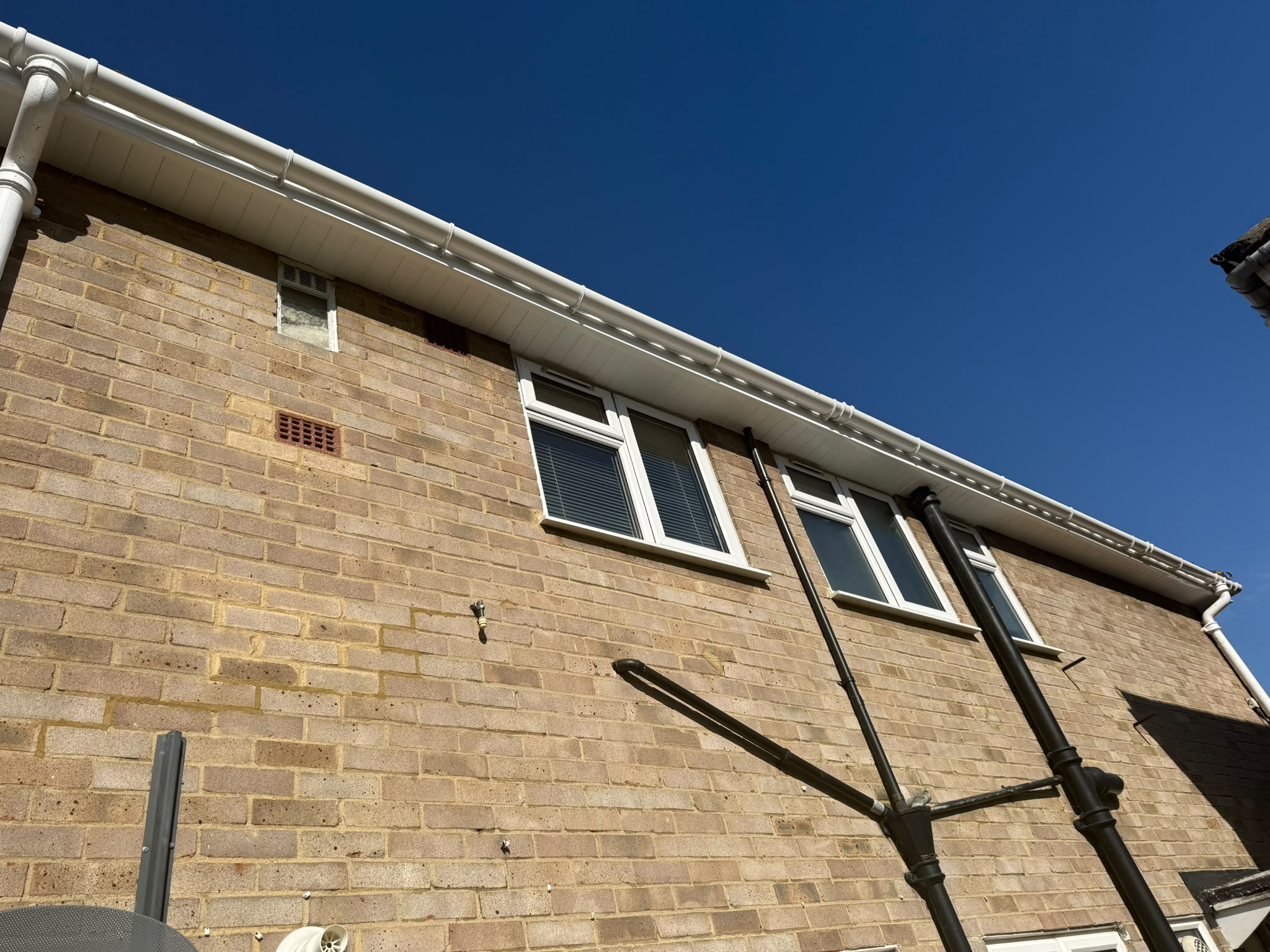
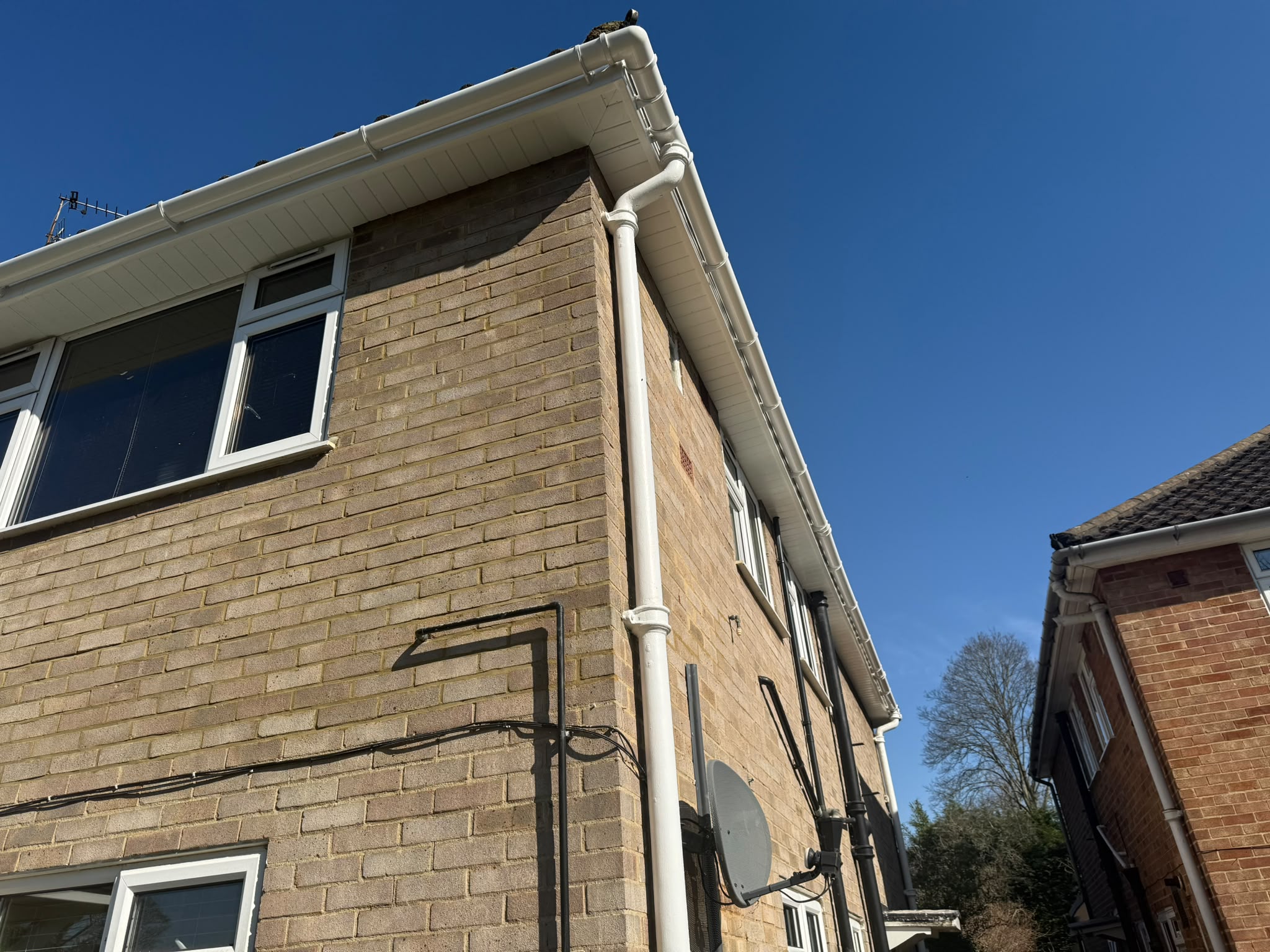
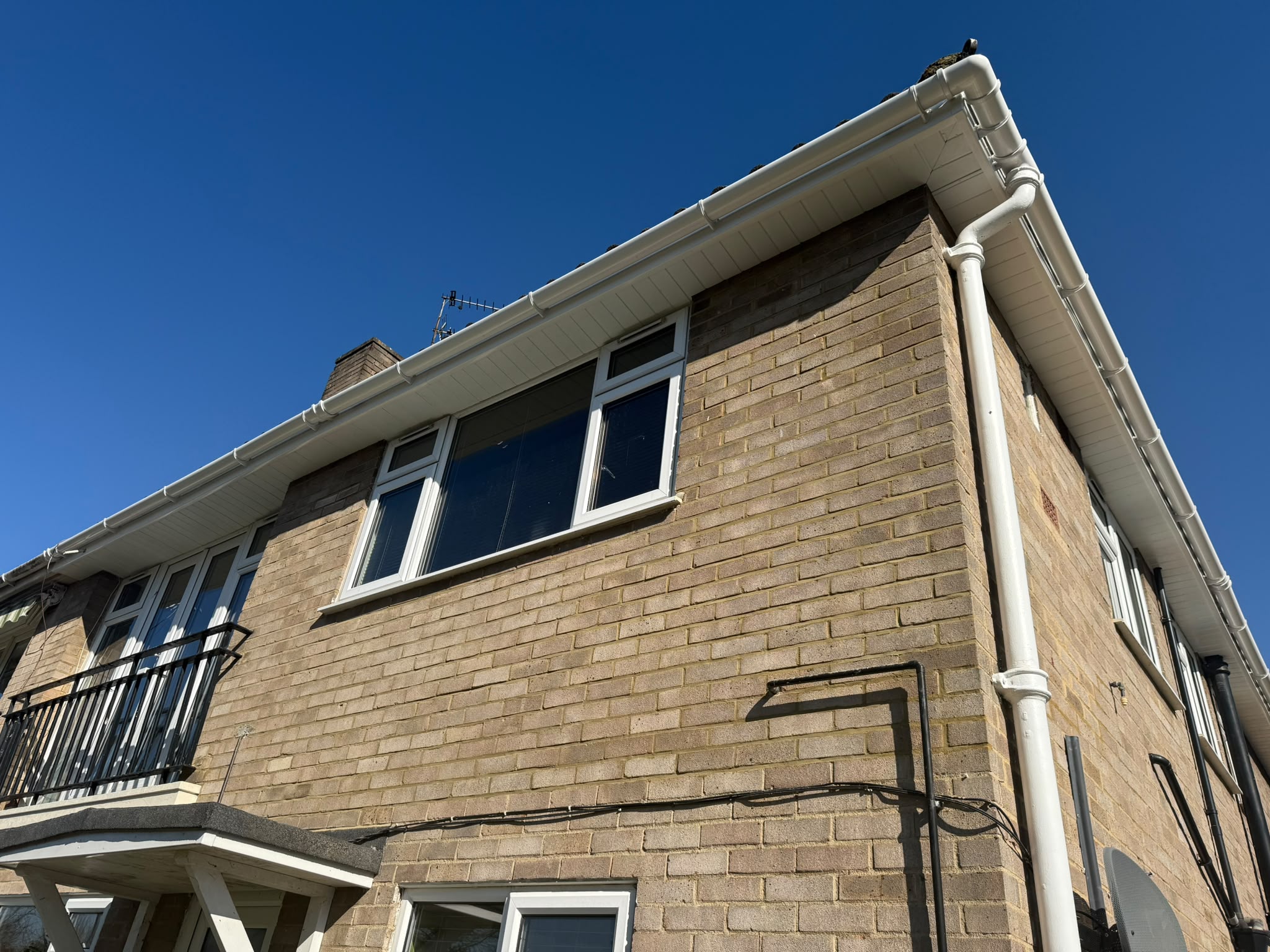
The fascia is the board fixed along the edge of the roof, where the gutter is attached. The soffit is the board underneath the eaves, which closes the gap between the wall and the roof and allows air to ventilate the roof space. The bargeboard runs along the sloping edge at a gable end, supporting the verge, which is the edge where the roof covering finishes against the end of the building.
Together these boards keep rain and wind out of the roof structure. When they fail, water can reach the rafters, gutters can pull away, and birds or insects can enter the roof space. Ventilation through the soffit can also be affected, which matters for condensation.
Early warnings
Timber edges rot where water sits, and paint or coatings wear away over time. These are the signs we look for.
If timber fascias or soffits feel soft, crumble or have lost their paint, water may be getting into the wood. Please do not test them by pushing hard from a ladder.
Loose brackets, or gutters that drop out of line, often mean the fascia behind is failing. Gutter fixings need solid timber to hold them.
Dark marks on render or brickwork beneath the eaves can show that water is running from a blocked or leaking gutter.
Gaps at soffit joints or corners can let birds and insects in, and can allow wind-driven rain into the roof space.
Planning
uPVC is chosen because it needs less routine painting than timber. These are the points to discuss before a replacement system is selected.
The process
The timber behind the new boards decides how well they perform, so we start there.
Old fascias, soffits or bargeboards are removed carefully, and any loose gutter brackets are noted for replacement.
The rafter ends, battens and backing timbers are checked. Any rotten sections are cut back and replaced before the uPVC is fixed.
New backing boards or treated timber are fixed in place to give the uPVC a sound and level base. Lines are checked so that the finished edge runs straight.
The fascia, soffit and bargeboard profiles are cut and fixed with suitable clips and screws. Allowance is made for expansion and contraction, and the joints are finished neatly.
Gutters are refixed or replaced to the new edge, and the area is cleaned. We explain how to keep the new edges clear of debris.
Survey
We can look at the fascias, soffits and bargeboards as part of a wider roof survey. You receive a written explanation of what needs attention and the options for replacement.
Materials
Both materials can be used on the roof edge. The right choice depends on the design of the building and how you plan to care for it.
uPVC is a rigid plastic that does not rot, swell or need repainting in the way timber does. That makes it attractive for edges that are hard to reach and exposed to the weather on every side. It is also available in a range of colours and finishes, so the edges can match windows, doors and rainwater goods. The trade-off is that uPVC expands and contracts with temperature, so boards must be fixed in a way that allows movement without buckling, and joints must be made correctly.
Plastic edges still depend on what sits behind them. If the rafter ends or backing timbers are damp, uPVC will not stop the decay, and it may hide the problem for longer. This is why we look behind the boards where access allows, and why we recommend treating or replacing any damaged timber before the new system is fixed.
Questions
Answers to the most common questions about fascias, soffits and bargeboards.
Yes, although far less than timber. Keep gutters clear, check the joints from ground level from time to time, and wash the surface when it becomes dirty. Avoid abrasive products, which can mark or dull the finish.
Often, where the damage is local and the backing timber is sound. We check the joins and make sure the new section matches the profile and colour as closely as possible.
Discolouration can be caused by damp, algae, dirt or water from a leaking gutter. Some marks wash off, while others point to a problem that needs attention. The survey shows whether the cause is surface dirt or moisture.
It can, if the soffit is designed with suitable vents. Ventilation matters for the roof space, and blocking it can cause condensation. We check the existing ventilation before changing the soffit.
Usually it should, for a consistent look, but it does not have to be identical. Profiles and colours are chosen together, and we talk through the options before anything is ordered.
Where we work
We work across five regional areas: North London, North West London, West London, Hertfordshire, Buckinghamshire. Not sure if we cover your street? Call us on 01632 960123, or see all areas we cover.
Next step
Tell us what you have noticed and we will arrange an inspection. Visit the contact page to get in touch.