Keep and repair
- Suits stacks that are structurally sound with local defects
- Keeps the appearance and ventilation as they are
- Allows the flashings and pots to be renewed
- Requires ongoing inspection of the mortar and joints
Roof Repairs
A chimney is a structural and weather-facing part of the roof, and small faults can lead to damp in the house. Repairs keep the stack sound and watertight, while removal is a larger decision. Here is how we approach both.
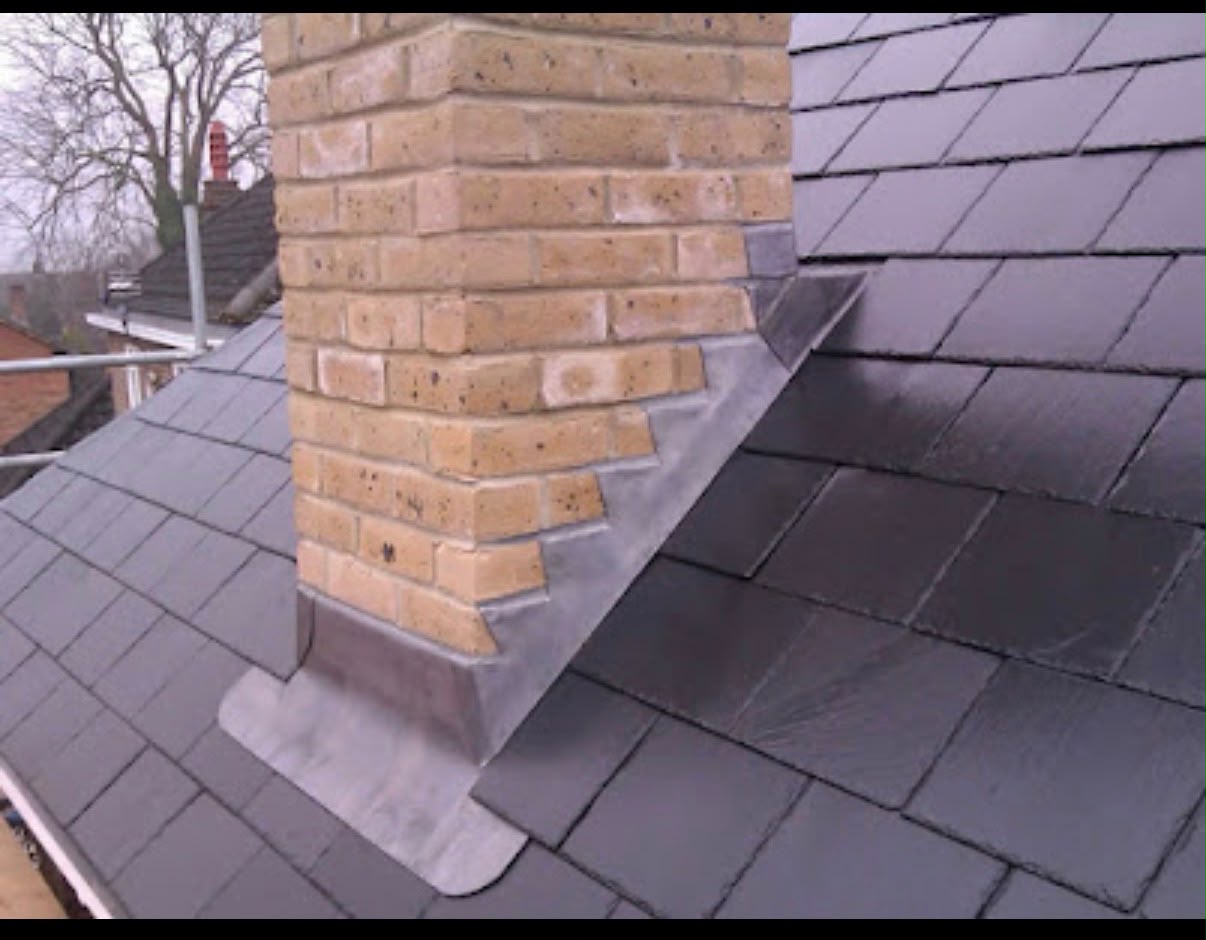
A chimney stack is built from brick or stone, with mortar between each course, and it is usually topped with pots or cowls. Its weak points are the mortar, the flashings where it meets the roof, and the pots and cowls that let smoke or ventilation out. Flashings are the thin metal sheets, traditionally lead, that seal the joint between the stack and the roof. Water usually enters at these junctions, which is why flashings matter as much as the brickwork.
Chimney work can be dangerous because of height, loose masonry and fragile surfaces. Please keep clear of the area below a damaged stack, and do not climb onto the roof or the stack to look at it. We inspect from safe positions and explain what we see in plain language.
Repairs
Many chimney problems can be corrected without rebuilding the stack. These are the repairs we discuss most often.
Warning signs
Chimney faults can build up slowly, so it helps to notice the early signs.
Damp or stains on the wall beside a fireplace, or on the chimney breast in the loft, can show that water is getting into the stack.
Mortar that falls out from between bricks or stones weakens the stack and lets rain through the joints.
A stack that appears to lean, or has cracks running through the brickwork, needs a structural check before any repair is planned.
Pots and cowls that move in the wind can damage the stack and open up gaps at the top.
The process
The steps below describe a typical repair. The exact work depends on what the survey finds.
We inspect the stack, flashings, pots and cowls from safe positions, and check the loft and chimney breast where access allows.
We explain the faults, the repairs needed, and whether the work is urgent. Where a structural concern arises, we say so before any repair begins.
Suitable access equipment is set up, and the area is protected so that falling debris cannot reach people or property below.
Failed mortar is raked out and repointed, damaged bricks are replaced, and any rebuilding is carried out to match the existing stack.
Lead or other flashings are re-dressed or replaced, pots and cowls are refitted, and the work is checked for watertightness.
Assessment
A roof assessment can cover the stack, the flashings and any signs of damp in the loft. We explain the findings and the options in writing, so you can decide what to do next.
Removing a chimney is a different job from repairing one. Some homeowners consider removal because the stack is no longer used, because it is costly to keep sound, or because it is in poor condition. Removal is not always the right answer, and it changes the structure and ventilation of the building, so it needs proper assessment first.
When a stack is removed, the roof and the loft must be made good. That includes re-forming the roof covering, sealing the area where the stack stood, and making sure the roof timbers are supported correctly. Ventilation for the roof space must also be considered, because a chimney may have helped air move through the loft.
Removal also changes how the building looks from the street, so the new roofline and any patch of different material need to be considered. A stack can be lowered or capped rather than removed completely, and this middle option is sometimes the most sensible route. We set out each option, including what it would involve, so you can compare them on equal terms.
Options
These options are weighed up together. The right choice depends on the stack’s condition, its use and the building around it.
Related
Questions
Answers to the questions we are asked most often about chimney work.
Often yes, where the brickwork is sound and the mortar has failed only at the joints. Repointing needs care so that the new mortar does not trap moisture or damage the bricks. We check the stack first and tell you whether repointing is suitable.
Water often enters at the flashings, at the junction with the roof, or through a cracked pot or cowl. It can also run through the brickwork and appear some distance away. The survey traces the route rather than assuming the source.
Not necessarily, but an unused stack still needs maintenance, because it can leak and affect ventilation. Before deciding whether to keep or remove it, we check the condition and the building’s needs, and set out the options.
Removal can involve significant structural work, roof repairs and making good the loft. The effort depends on the stack’s height, its construction and the roof around it. We explain the scope after the inspection.
No. A roof assessment looks at the external stack and flashings. It does not replace the inspection of flues and fireplaces by a suitably qualified specialist, such as a registered chimney sweep or heating engineer.
Where we work
We work across five regional areas: North London, North West London, West London, Hertfordshire, Buckinghamshire. Not sure if we cover your street? Call us on 01632 960123, or see all areas we cover.
Next step
If your chimney is damp, cracked or leaking, a roof assessment will show what needs attention. Reach us through the contact page to arrange a visit.