
Pitched roofs
- Tiles or slates shed water by gravity down the slope
- Usually suited to houses, bungalows and many extensions
- Loft space can be ventilated to manage moisture
- Generally straightforward to inspect and maintain
Roofing
A new roof is a complete covering fitted to a building, usually because the roof covering has reached the end of its life or no longer suits the property. Here is how we approach the work, from first assessment to final checks.
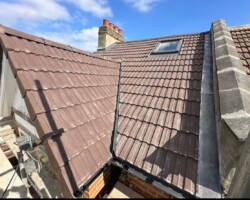
A new roof installation means fitting a complete roof covering to a building’s structure. The covering is the outer layer you see, such as tiles, slates or a flat membrane. Beneath it sits the underlay, a layer that sheds any water that gets past the surface. Battens are the timber strips that the tiles hang from, and the rafters are the sloping timbers that carry the whole structure.
The work usually involves stripping the old covering, checking the timbers, fitting new underlay and battens, and laying the new surface. Flashings, which are the metal or lead strips that seal joins against walls, chimneys and valleys, are replaced at the same time. Where the work qualifies, our 10-year guarantee may apply, and eligibility and terms are explained in writing before you commit.
Early warnings
A roof rarely fails all at once. These are the signs homeowners tend to notice first, and any one of them is a reason to arrange an inspection rather than a reason to panic.
Tiles that have slipped out of line, or cracked and missing pieces, let wind and rain in. Thick moss or lichen across the surface can also show that the covering is holding water.
If you can see daylight between the roof and the loft, or find damp patches on the underside of the timbers, water is likely getting through. Ask us to look rather than going into the loft to investigate yourself.
A roof line that dips or bows can point to timbers that have weakened over time. This needs a structural check as well as a covering assessment, so it is worth raising early.
If the same areas keep needing attention, patching may cost more than it saves. Several repairs in a short period often suggest the covering as a whole is reaching the end of its working life.
Assessment
Before we quote for a new roof, we look at the whole structure rather than only the surface. We inspect the covering, the gutters and fascias, the flashings, and the way the roof meets walls and chimneys. Where it is safe to do so we check from the ground and from suitable access points, and we note the condition of any timbers that can be seen.
We also ask about the history of the property. Previous repairs, past leaks, and any insulation or loft conversions all affect the design. A roof that has been altered may need different ventilation or a different underlay to perform well.
Before work starts
Once the survey is complete, we confirm the following points with you in writing so that you know what will happen before any work begins.
Free survey
Tell us what you have noticed and we will arrange a survey and talk you through the options. There is no obligation to go ahead, and you will receive a written explanation of the proposed work before you decide.
The process
Every project differs, but most new roof installations follow the same broad sequence. We agree the programme with you before the first day on site.
We protect the house, the garden and the access route, and arrange skips or storage for materials. Neighbours are told about deliveries or noise that may affect them.
The existing tiles, slates or membrane are removed and sorted. Any defective timbers are exposed so they can be repaired or replaced before the new covering goes on.
Repairs to the structure come first, followed by new underlay laid to the correct overlaps and secured with battens. This layer keeps the roof weathertight while the rest of the work proceeds.
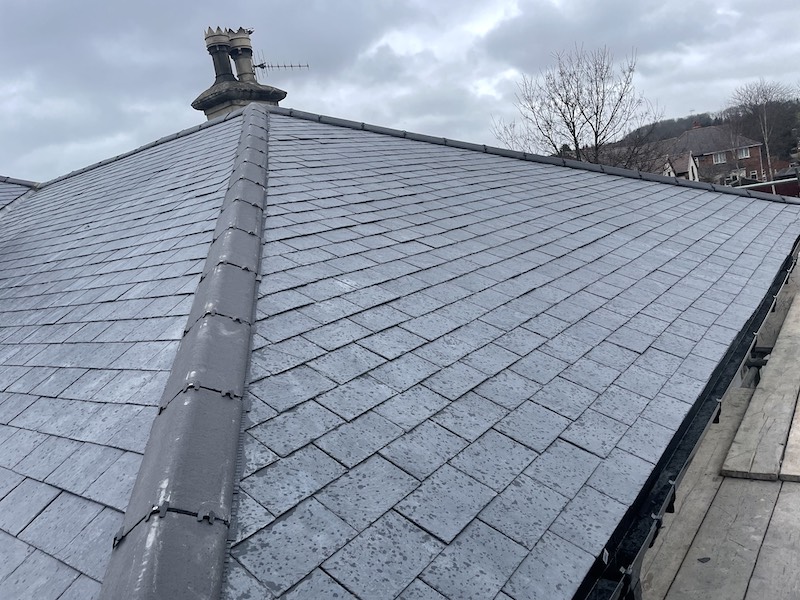
The chosen covering is fixed to the manufacturer’s instructions and the roof pitch. Ridges (the highest line) and hips (the sloping external corners) are finished neatly, and flashings are fitted where the roof meets walls and chimneys.
The site is cleared, gutters are checked and cleaned, and the finished roof is inspected. We walk you through the work and give you written information about the materials used.
Choosing a covering
The right covering depends on the roof shape, the building and how you plan to use the space below. These are the broad differences we discuss with homeowners.
A well-installed roof still needs routine attention. Look at the surface from the ground each autumn with binoculars, checking for slipped pieces or debris in the gutters. Keep leaves and moss from building up along gutters and valleys, because trapped water is one of the most common causes of early wear.
Keep a simple record of the installation date, the materials used and any inspections. That record is useful if you sell the property or need to check a detail later.
Related
Questions
Answers to the questions we are asked most often before a new roof project.
A survey is the dependable way to tell. If the covering is worn across much of the roof, the timbers are affected, or repairs have become frequent, replacement usually makes more sense. If the problem is localised and the rest of the roof is sound, targeted repairs may be enough. We explain both options and the reasons for each.
In most cases you can stay in the property. There will be noise, deliveries and some disruption, particularly during stripping, so we discuss the programme and access with you before work starts. If the work affects a room below, we talk through protection and any precautions you may want.
We inspect the finished roof before we leave the site, and we explain what has been done. Written information about the materials, and the terms of any guarantee, is provided so that you have them on file.
A like-for-like replacement often does not need planning permission, but changes to height, shape or materials can. Some properties, such as listed buildings and homes in conservation areas, have stricter rules. Please check with your local authority or a suitable professional.
The programme depends on the size and complexity of the roof, the weather and access. We cannot give a fixed timescale until the survey is complete, and we will agree the expected programme with you in writing.
Where we work
We work across five regional areas: North London, North West London, West London, Hertfordshire, Buckinghamshire. Not sure if we cover your street? Call us on 01632 960123, or see all areas we cover.
Next step
Contact us to arrange a survey, and we will explain what the roof needs and what the work would involve. You can reach us through the contact page.