
Masonry and render
- Breathable coatings let moisture escape from the wall
- Masonry paints suit rendered and brick surfaces
- Non-breathable coatings can trap moisture and cause flaking
- The surface must be sound and free of loose material
Exterior Painting
Good exterior paint lasts because of the preparation beneath it. We assess the surfaces, prepare them properly, choose a coating to suit the material and exposure, and agree the colour and finish with you first.
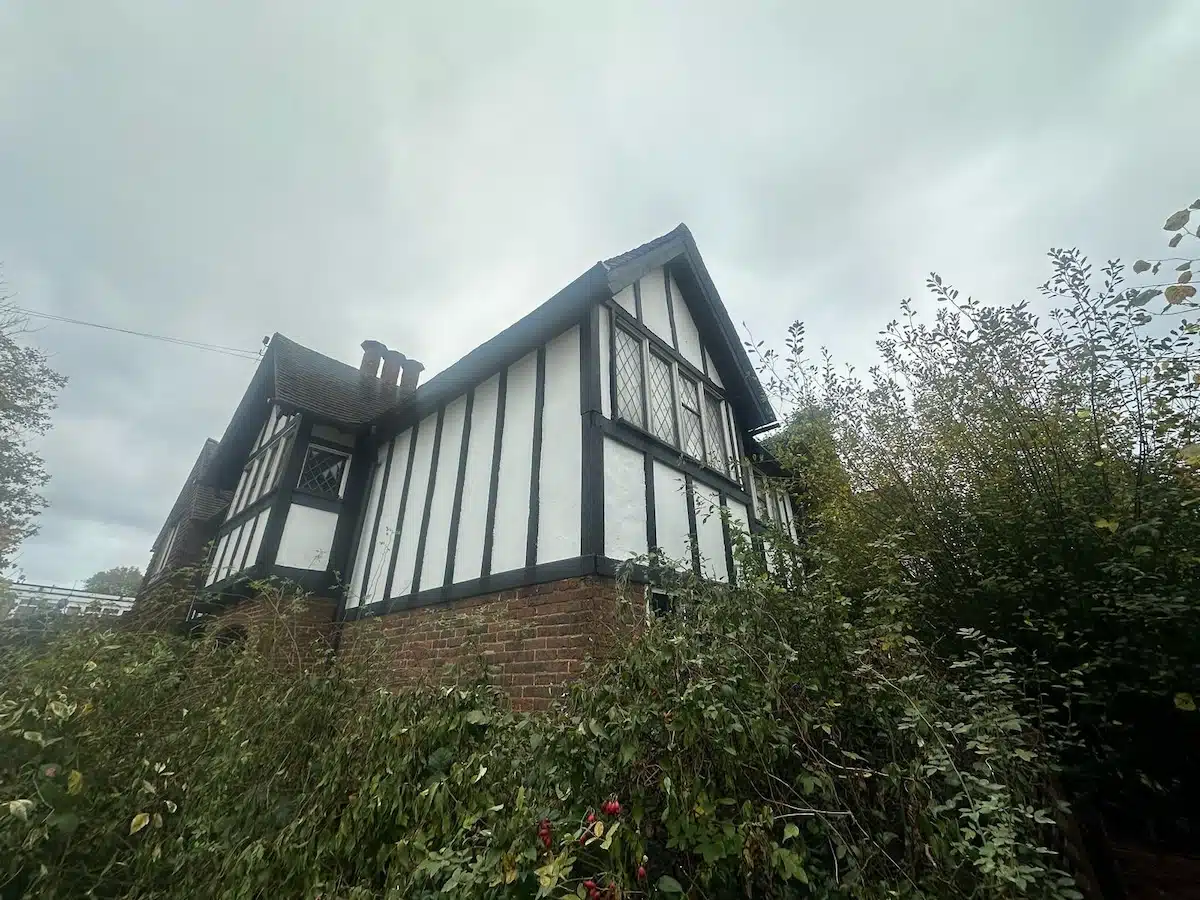
Exterior painting usually includes render or masonry walls, timber windows and doors, fascias, soffits, bargeboards, and metalwork such as railings or downpipes. Each surface behaves differently. Masonry breathes and absorbs moisture, timber moves with changes in humidity and needs sealing, and metal corrodes once its coating is broken.
Paint is a protective system as well as a colour. Its job is to keep water out where it should be kept out, and to let moisture escape where it needs to. Matching the coating to the surface, and preparing that surface thoroughly, is what separates a finish that lasts from one that fails early.
Warning signs
Paint rarely fails overnight. These signs suggest the surface has reached the point where repainting is worth considering.
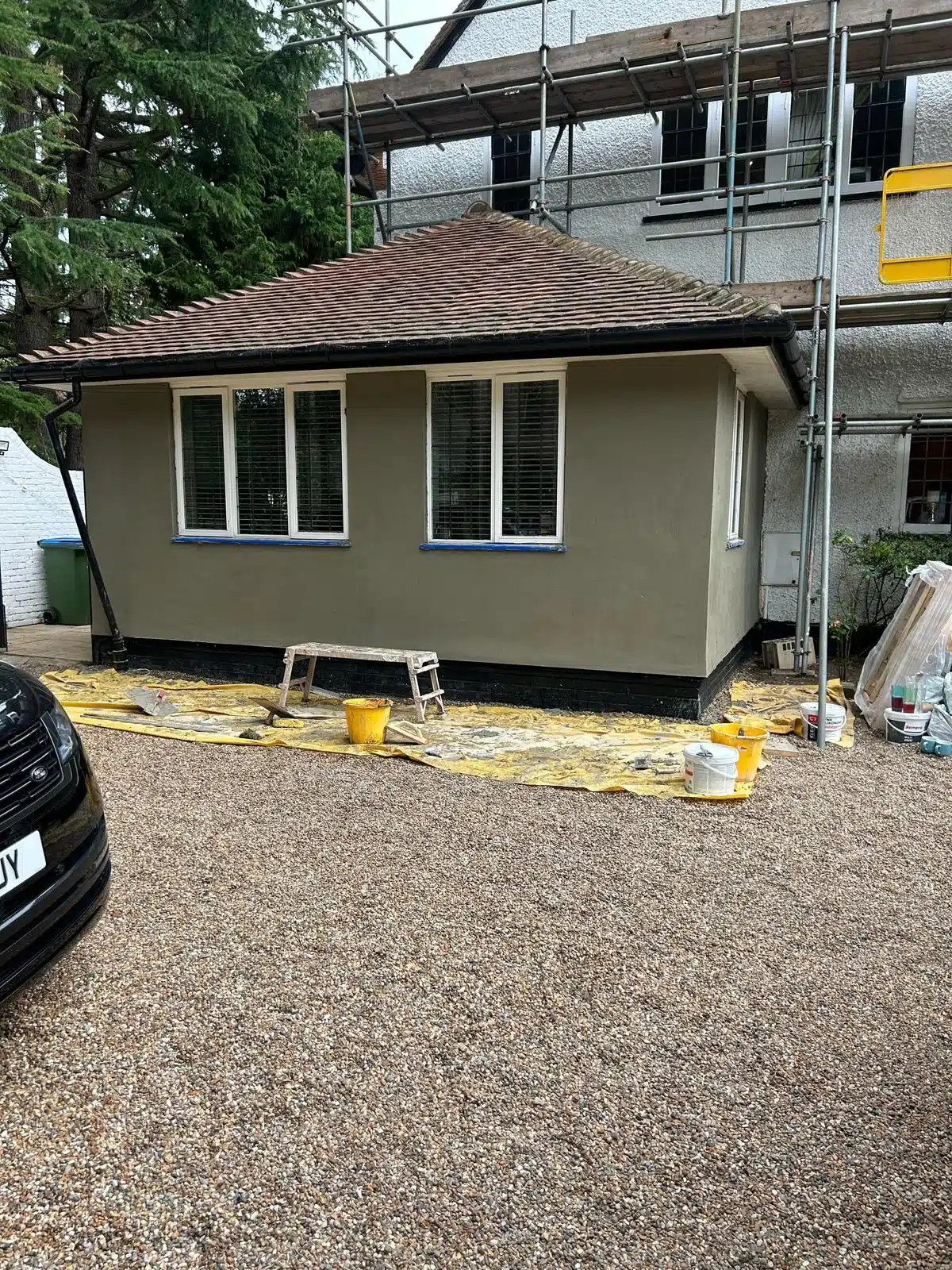
Paint that lifts in flakes or sheets has lost its bond. Repainting over it without removing the loose material will fail quickly.
A powdery residue that rubs onto your hand shows that the top layer is breaking down under sunlight and weather.
Patches of dampness, mould or algae may suggest moisture trapped in the wall or the timber, which needs to be understood before painting.
Timber that has turned grey or started to split has lost its protective coating. It should be assessed for rot before it is decorated.
Surface assessment
Before we quote, we look at each surface. We check for cracks in render or masonry, failed pointing, lifting edges and areas of bare timber. Timber is probed for softness at joints and sills, and metal is checked for rust. Where possible we note which coatings are already present, because an incompatible paint can stop a new coat from bonding.
We also consider the orientation of each elevation. The side facing the prevailing weather needs more attention than a sheltered side, and damp areas near ground level may need separate treatment. This assessment shapes the preparation and the choice of coating.
Recent work
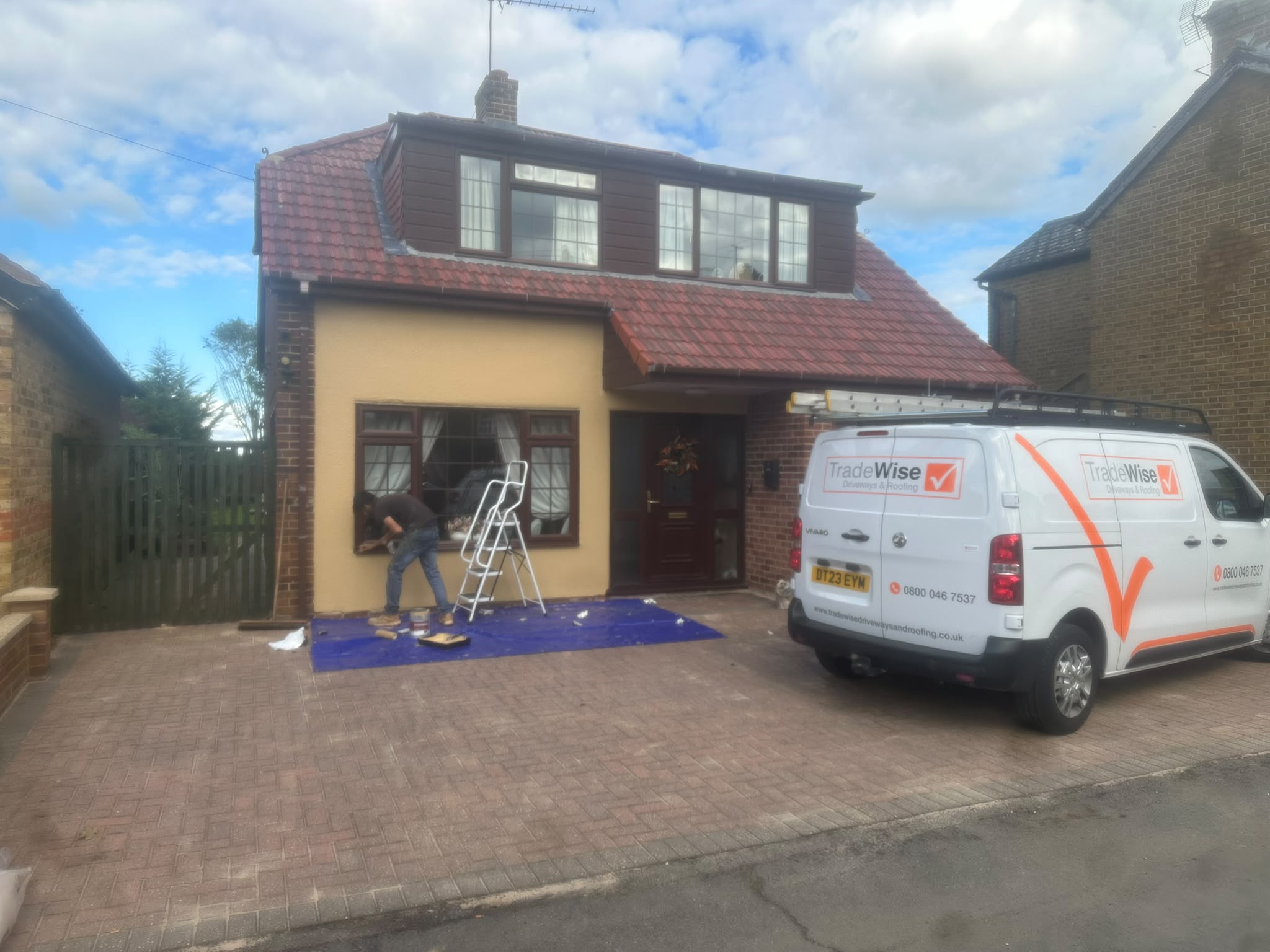
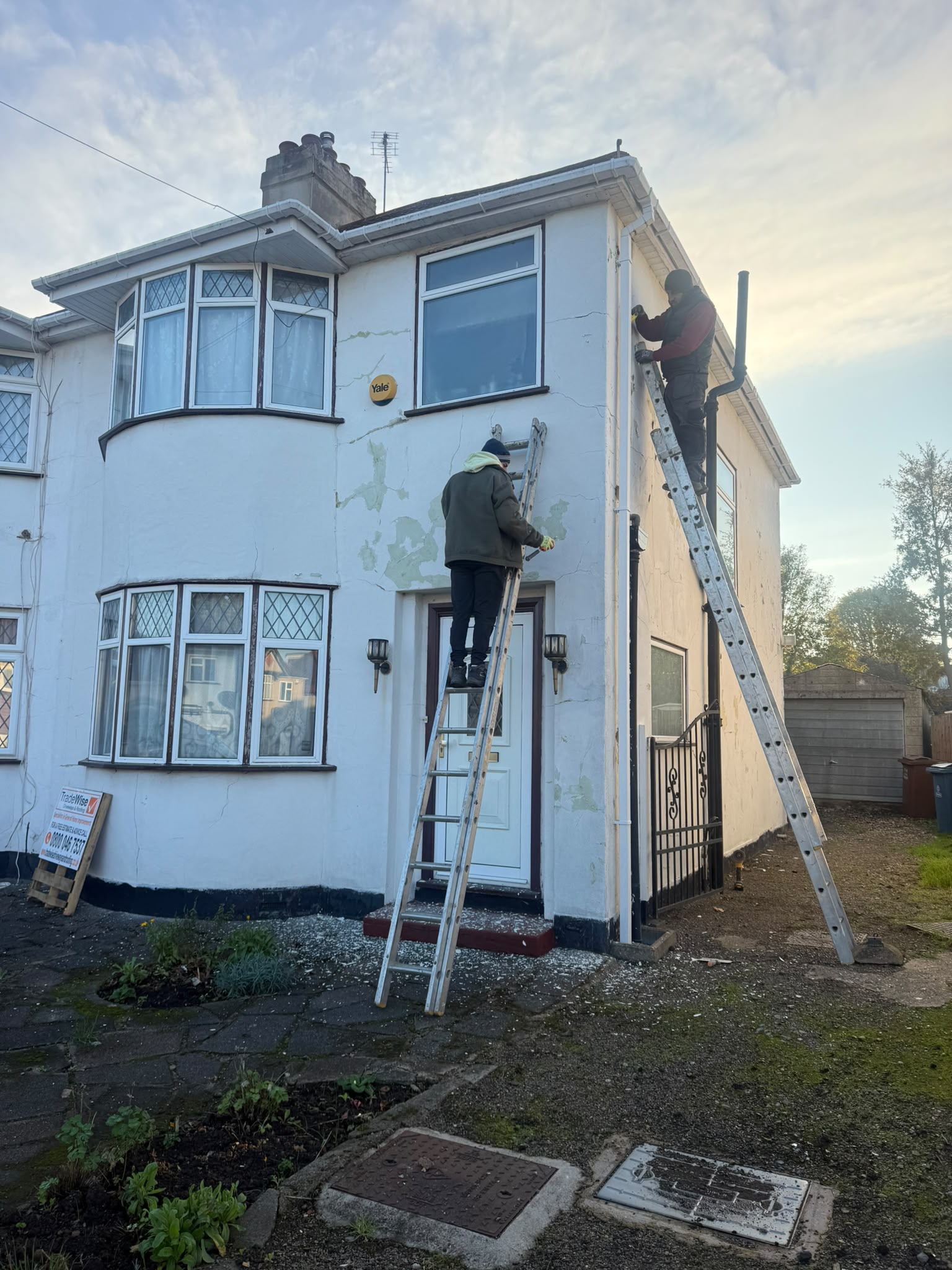
A selection of exterior jobs, from a rendered garden room to a full elevation.
The process
Preparation takes longer than painting on most projects, and it is where most of the value sits. The steps below follow the order we use.
We confirm which surfaces are included, the colours and finish, and any areas that need repair first. The agreed scope is set out in writing.
Windows, doors, plants, drives and paths are covered or masked so that paint does not reach them. Work is planned around the access arrangements.
Dirt, algae and loose debris are removed by suitable washing or brushing. Surfaces must be dry before paint is applied, and we check moisture levels where needed.
Cracks are filled, failed mortar is repaired, and loose paint is removed. Bare timber and metal are primed, and sealants are renewed around windows and joints.
Paint goes on in the number of coats the system requires, with each allowed to dry before the next. Edges and corners are finished carefully, and coverage is checked as the work progresses.
We walk the finished work with you, check the finish against the agreed colour, and explain how to care for the surfaces.
Free survey
We can assess the walls, timber and metalwork and explain which preparation is needed before any colour is chosen. You receive a written explanation of the scope and the proposed finish.
Coatings
No single paint suits every surface. The choice depends on the material, its condition and the exposure of the wall or timber.
Practical planning
These practical points shape the programme and the final result. We discuss each one before work starts.
A colour that looks right on a small sample card can appear very different on a full elevation. Sunlight, shade, the colour of neighbouring walls and the texture of render all change how a shade reads. We suggest testing colours on the actual wall, and we recommend looking at them at different times of the day before the decision is final.
The finish changes the look as much as the colour. A matt finish hides small imperfections but can be harder to wipe clean, while a satin or gloss finish reflects more light and shows surface faults more clearly. We discuss the finish alongside the coating, because the two must work together on the surface you have.
Related
Questions
Common questions about preparing, colouring and maintaining painted exteriors.
Sometimes, if the existing paint is sound, well bonded and compatible with the new coating. Where it is flaking, chalking or incompatible, we remove the loose material and prepare the surface again. The assessment explains which applies.
It depends on the surface, the coating, the preparation and the exposure. We cannot give a fixed lifespan for any wall, because conditions vary considerably from one elevation to another.
Paint only bonds as well as the surface beneath it. Loose or dirty material, damp, and unrepaired cracks will show through a new coat. Careful preparation gives the paint a sound base, and it is where most early failures can be avoided.
In most cases, yes, but some properties have restrictions. Listed buildings and conservation areas can be subject to planning controls. Please check with your local authority or a suitable professional before committing to a colour that changes the appearance of the building.
We suggest testing sample areas on the actual wall, viewing them in daylight at different times, and comparing them with neighbouring properties and any stone or brickwork. Colours can look quite different outdoors, so it is worth testing before you buy.
Where we work
We work across five regional areas: North London, North West London, West London, Hertfordshire, Buckinghamshire. Not sure if we cover your street? Call us on 01632 960123, or see all areas we cover.
Next step
Share the surfaces, the materials and any problems you have noticed. We will arrange an assessment and explain the preparation and finish, and you can reach us through the contact page.