
Full strip
- Old covering removed and sorted for disposal
- Timbers and boarding inspected and repaired in place
- Allows new underlay and ventilation to be fitted correctly
- Usually the more thorough option for older roofs
Roofing
Re-roofing means replacing the covering of an existing roof while the building stays in place. It suits roofs whose timbers are sound but whose surface has worn beyond practical repair. We explain the options clearly before anything begins.
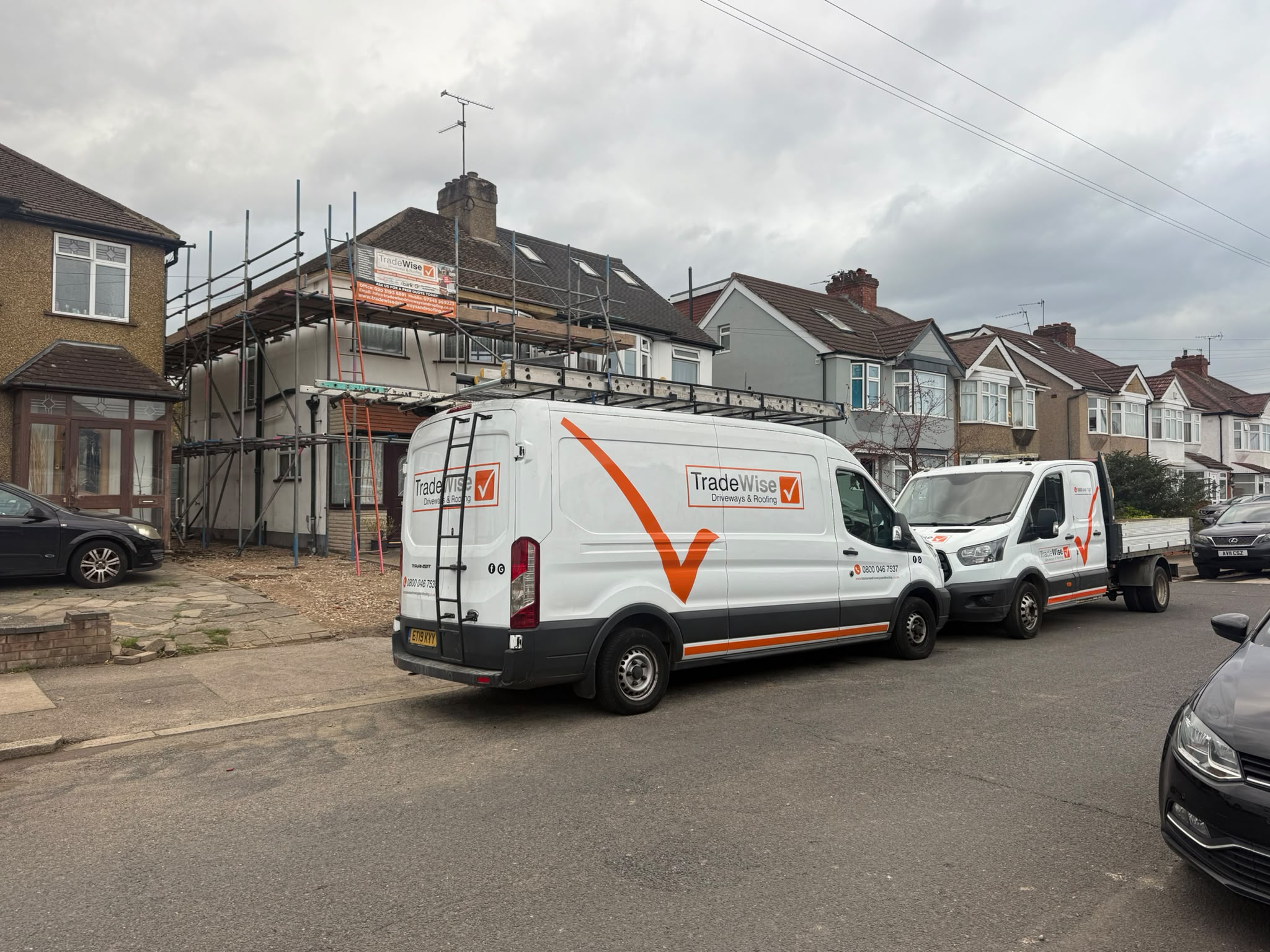
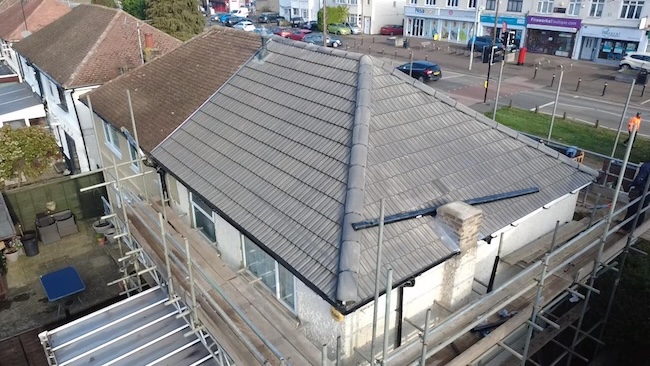
Re-roofing removes the old covering and replaces it with new. The structure underneath, which is the rafters and the boards fixed across them (known as sarking boards), stays where it is provided it is sound. That makes re-roofing different from a full rebuild, where the whole roof frame is taken down and reconstructed.
Depending on condition, the old covering may be stripped completely, or in some cases a new covering may be laid over an existing one. We only recommend overlaying where the structure and the existing layer allow it, and where the result will still drain and ventilate properly. Stripping the roof also gives the chance to correct problems that are hidden beneath the surface.
Two approaches
Two approaches are commonly discussed when a roof is due renewal. Neither suits every roof, and the right choice depends on the survey.
Early warnings
Most roofs give warning long before they fail. The signs below are worth noting and mentioning to us during a survey.
Coverings that are thin, brittle, curling or crumbling across large areas usually mean the surface is near the end of its useful life. Isolated damage is different and is often repairable.
Brown rings or damp patches on upstairs ceilings, particularly after heavy rain, suggest water is passing the covering. Do not wait for the stain to spread before arranging a look.
Growth across the surface holds moisture against the covering and can lift it. Some growth is cosmetic, but dense coverage can hide cracking that needs attention.
Cracked pointing, loose flashings and damp chimney breasts can point to aged edges as well as the main covering. These details are checked whenever a roof is renewed.
Our approach
A re-roof quote should rest on evidence rather than guesswork. We inspect the covering, the verges, the eaves and the ridge, and we look at the underside of the roof where access allows. Our notes cover the timbers, the condition of the boarding, and the spacing and fixing of the battens.
Where we find dampness, rot or movement, we explain what is affected and how it would be treated. Some of these issues can be fixed as part of the re-roof. Others may need a structural check by a qualified person before you decide how to proceed.
Next step
We can arrange a survey and set out the choices in writing. You will see what we have found, what we suggest and why, before any decision is needed.
Before you commit
A clear quote tells you what is included and what is not. Ask us to confirm these points in writing.
How the work is done
The sequence depends on whether the roof is stripped or overlaid. The steps below describe a full strip, which is the most common approach.
We confirm the scope in writing, agree the access arrangements, and fix the start date with you once materials are ordered and the programme is understood.
Sheets and boards protect windows, walls, plants and the drive. Suitable access equipment is set up before anyone works at height.
The old covering is removed and sorted. Usable tiles or slates may be kept for reuse or repairs, where their condition allows. Waste goes into a skip for disposal.
Damaged boarding, rotten ends and loose battens are repaired or replaced. This is the stage at which hidden problems are found, and we discuss any additional work with you before it goes ahead.
New underlay is laid, battens are fixed, and the chosen covering is installed. Flashings, ridges and verges are finished and checked for tightness.
Every re-roof starts with the same question: is the structure sound enough to carry a new covering in the chosen form? If it is, the decision becomes one of value and disruption. A full strip gives the most complete view of the timbers and usually produces the most consistent finish. An overlay can be sensible where the roof is flat enough, the existing layer is sound, and the building can take the extra load.
We also think about how long you expect the roof to serve. Some homeowners plan to stay in the property for many years and want the work done thoroughly, while others need a dependable roof that will help a future sale. Both views are valid, and we shape the specification around what you need from the roof rather than the other way round.
Related
Questions
These are the questions homeowners ask most often when a roof is nearing the end of its life.
Sometimes. Overlaying is only suitable where the structure can carry the extra weight and the existing layer is sound and flat enough. Many older roofs are not suitable, so we confirm this during the survey rather than assume it.
Sound tiles or slates may be kept for repairs on the same roof or elsewhere on the property, where condition and matching allow it. Broken or unusable material is taken away for disposal. We explain what we plan to do with it before the work starts.
We aim to keep the building weathertight at every stage. Underlay goes down as the work progresses, and protective sheets are used in poor weather. If rain is forecast, we will discuss the sequence with you so the house stays protected.
Replacement involves more materials and labour than a repair, so it usually costs more at the outset. The real question is whether repairs will keep the roof performing for the period you need. A survey gives a clearer picture, and we set out both options in writing.
Where the work qualifies, our 10-year guarantee may apply, and eligibility and terms are explained in writing before you commit. Please ask us to show you what is covered and what is excluded.
Where we work
We work across five regional areas: North London, North West London, West London, Hertfordshire, Buckinghamshire. Not sure if we cover your street? Call us on 01632 960123, or see all areas we cover.
Next step
Send us a message and we will arrange a survey, then set out the options in writing. You can find our details on the contact page.