
Clay tiles
- Fired from natural clay with a varied, traditional finish
- Often suited to period and traditional properties
- Matching an older profile can take time and sourcing
- Lighter than many concrete options, though still checked for load
Roofing
Tiled roofs shed rain through individual pieces laid in overlapping rows. Clay and concrete are the most common coverings on British houses, and each has its own look, weight and maintenance needs. Here is how we repair and replace them.
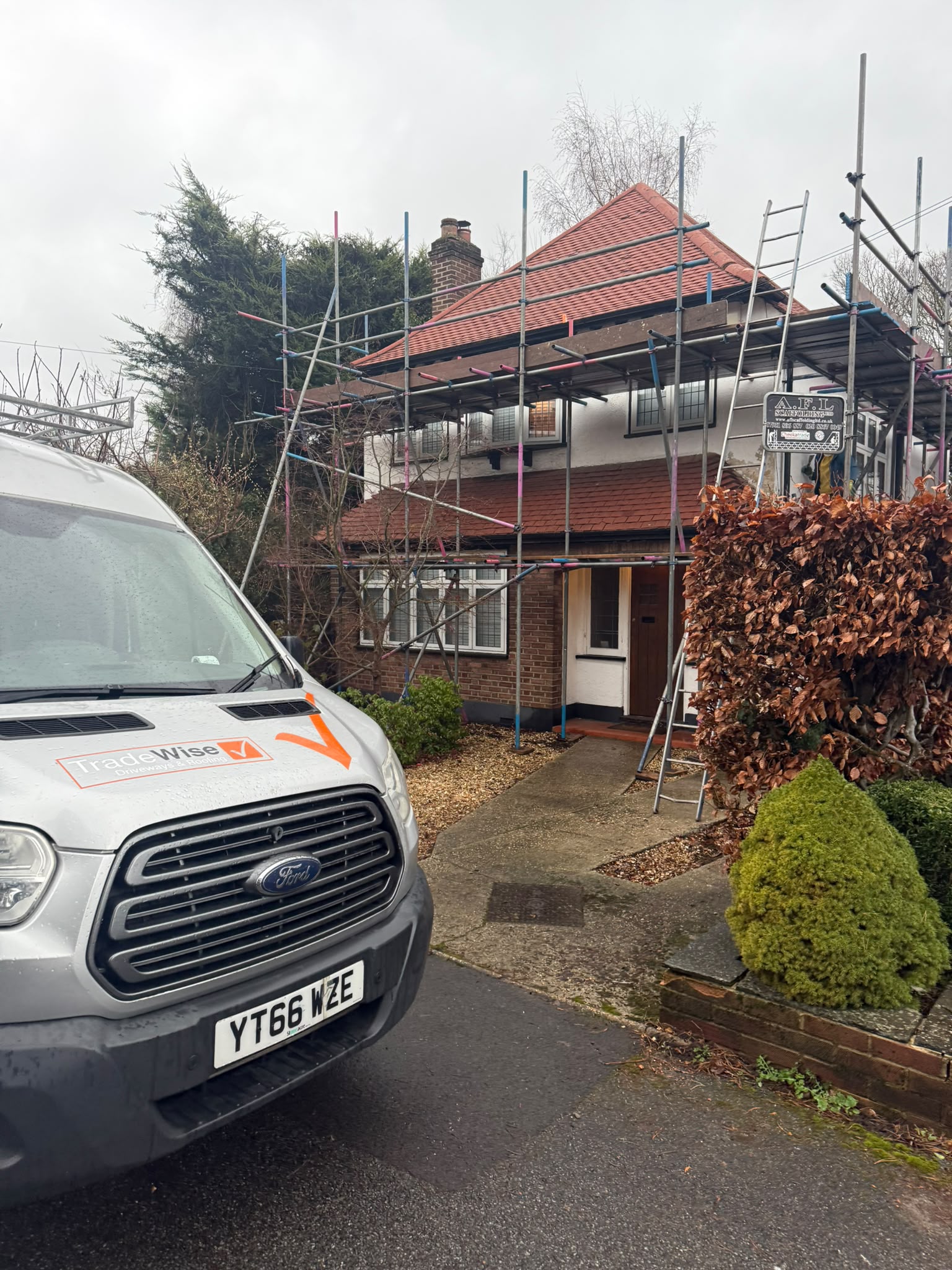
Clay tiles are fired from natural clay and tend to have a warm, varied colour. They are generally lighter than many concrete tiles, and they can last a long time when they are sound and well fixed. Some older profiles are hard to find, which is why matching is a common concern when a roof is repaired.
Concrete tiles are made from sand, cement and water, moulded or pressed, and often coloured through the surface. They are typically heavier than clay, and their finish can weather over time. Both materials depend heavily on the fixings, the underlay and the ventilation beneath, so a tiled roof is only as good as the system that supports it.
Pitch and fixings
Tiles rely on their overlap and their fixings to resist wind and rain. The overlap, known as the lap, is the amount each tile covers the one below it. We look for slipped, cracked or missing pieces, and we check the nails, clips and ridge fittings that hold them in place. Where the pitch is shallow, wind-driven rain is a bigger risk, so we pay particular attention to the lower courses and the verges.
Our inspection is carried out from ground level, from safe vantage points and, where it is safe, from suitable access equipment. We record what we see, photograph the defects, and explain how each one affects the roof’s performance.
Early warnings
Tiled roofs often give clear warnings. These are worth noting, particularly after storms or a long dry spell followed by heavy rain.
Tiles that have moved out of line, or that have cracked, need prompt assessment, as they expose the underlay and let water reach the timbers. Please do not climb onto the roof to check them yourself.
Damp insulation, staining on the underside of the roof, or drips after rain show that water is passing through the covering or the underlay.
Ridges and hips are exposed to the wind. If they look displaced or the mortar bedding has crumbled, they should be checked before the next strong wind.
Thick growth on the surface holds moisture against tiles and can push them out of place. Debris trapped in valleys and gutters can also back water up under the covering.
Materials
If a tiled roof needs replacing, the material is an important decision. These are the practical differences we explain.
Free survey
Our survey shows which tiles, fixings and flashings need attention, and whether repairs or a wider re-tile make more sense. We explain the findings in plain language and send them to you in writing.
Repairs
Many tiled roofs can be repaired without replacing the whole covering. These are the jobs we are asked about most often.
The process
Repairs to a few tiles are straightforward. A full re-tile follows a similar process to a re-roof, with more care given to the surface.
We record each area needing attention, mark the tiles to be replaced, and agree the scope with you in writing before work starts.
Tiles are lifted carefully from the surrounding courses. Anything cracked or damaged beyond repair is set aside for replacement with a suitable match.
The underlay and battens beneath are checked. Any damaged membrane is repaired so that water cannot pass the tiles even if one of them fails.
Replacement tiles are laid to the correct lap and secured with the appropriate nails or clips. Ridges, hips and verges are re-bedded or repointed where needed.
We check the finished area for alignment and security, clear debris from the gutters, and explain what has been done so you know what to watch for.
Tiled roofs are forgiving when they are well maintained, but small faults can spread quietly. Gutters, valleys and the lower courses collect debris, and a single cracked tile can let wind lift its neighbours. Checking the roof from ground level after storms is a practical habit, and it makes it easier to catch problems while the repair is still small.
Ventilation and insulation matter too. Warm, moist air from the house that reaches cold timbers can cause condensation, which then soaks into the underlay and the battens. We look at both during a survey, and we explain how changes to insulation can alter the way the roof performs in winter.
Related
Questions
These are the questions we hear most often from owners of tiled roofs.
Sometimes. Reclaimed tiles and close alternatives are often available from salvage sources, and we check the profile, size and colour before recommending a match. Where an exact match is not possible, we explain the options and how they are likely to look.
Tiles can slip because of wind uplift, failed or missing nails and clips, corroded fixings, or underlay that has broken down beneath them. A survey shows which of these is the cause, so the repair addresses the real problem.
Moss removal can help, but cleaning must be done with care so the surface is not damaged and moisture is not forced under the tiles. Please do not attempt to clean the roof yourself from a ladder. We will advise whether treatment, removal or repair is the better course.
Yes. Loft ventilation helps move moist air away from the timbers and reduces condensation. Ventilation is checked as part of our survey, and any changes are discussed before work begins.
In some cases a single slope can be re-tiled, but the junctions, ridges and valleys must still be sealed correctly. We look at how the slope connects with the rest of the roof before giving an answer.
Where we work
We work across five regional areas: North London, North West London, West London, Hertfordshire, Buckinghamshire. Not sure if we cover your street? Call us on 01632 960123, or see all areas we cover.
Next step
If you have noticed slipped tiles or water in the loft, get in touch so we can arrange a survey and explain your options. You can reach us through the contact page.