
Roofing
GRP Roofs for Flat and Low-Pitched Areas
GRP stands for glass-reinforced polyester, a laminate of resin and glass fibre applied in layers to form a seamless, waterproof surface. It is often called fibreglass, and it suits flat and low-pitched areas. Here is how we assess, install and look after GRP roofs.
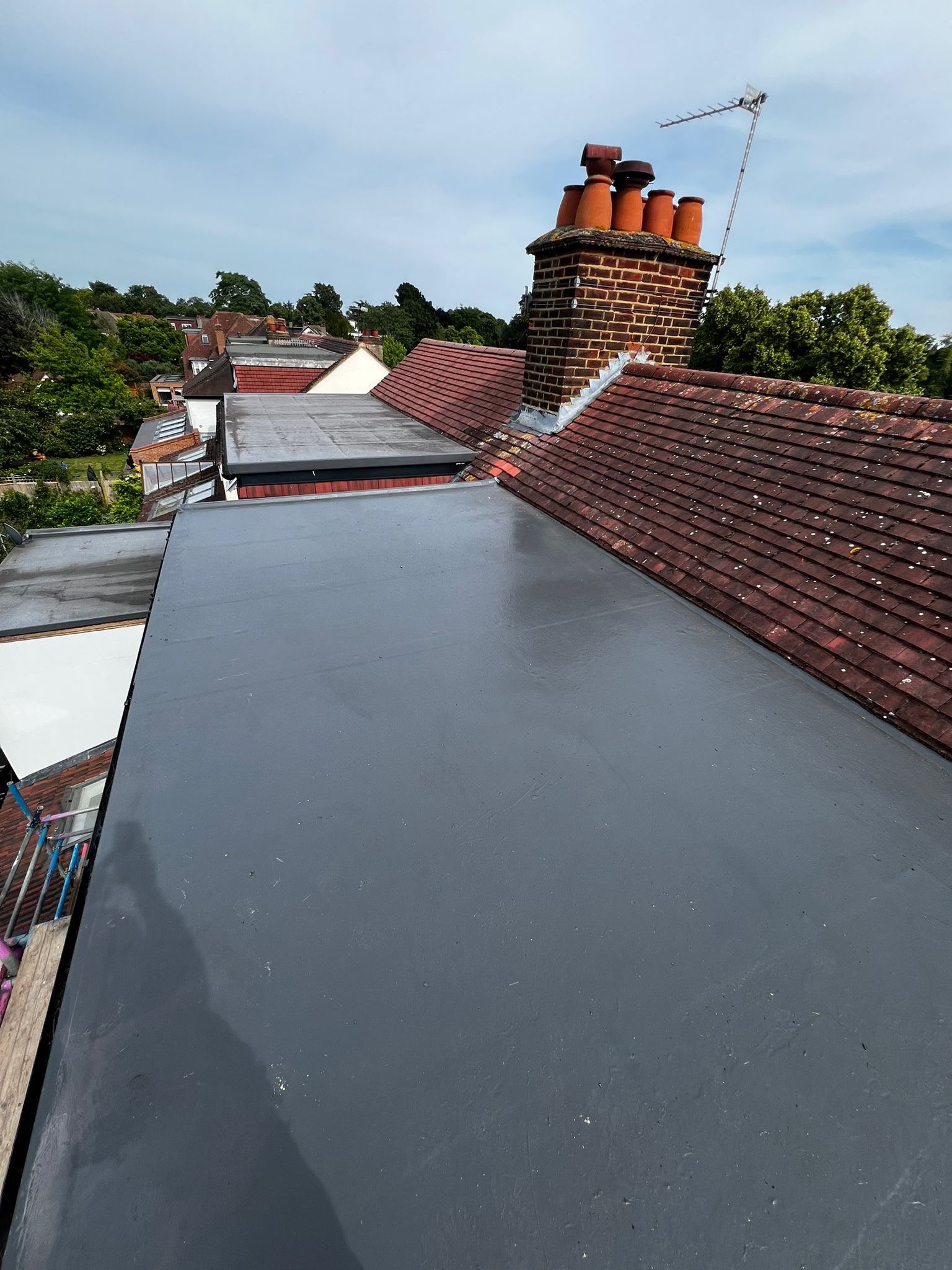
What GRP is and where it is used
GRP is built up in layers. A resin is applied to the deck, a glass fibre reinforcement is laid into it, and further resin and surface layers are added until the required thickness is reached. Because it is applied on site, the surface can be formed around upstands, outlets and awkward junctions with few joints. The finished surface is hard and rigid, and it is typically used on roofs that are accessed only for occasional maintenance by a professional.
GRP is most often found on flat or low-pitched roofs of garages, porches, bay windows, dormers and small extensions. The deck beneath must be sound and dry, and the design must allow falls so that water drains to the outlets. Our fibreglass roofs page covers the same category of system with a focus on the decisions homeowners face on smaller projects.
Early warnings
Signs your GRP roof needs attention
GRP is durable, but its surface can be damaged by impact, sunlight and poor drainage. These are the signs we look for.
-
Cracks or crazing
Fine surface cracks, or a pattern of small lines, can allow water into the laminate. Cracks near edges or outlets need prompt attention.
-
Lifting edges
Where the GRP lifts at an edge, upstand or junction, water can get underneath. These areas are often where leaks start.
-
Ponding water
Water that sits on the roof for long periods can shorten the life of the surface. This usually points to a fall that has been lost or a blocked outlet.
-
Staining or damp
Marks on the ceiling below, or damp in the wall near the roof edge, can point to a leak in the GRP or in its junction details.
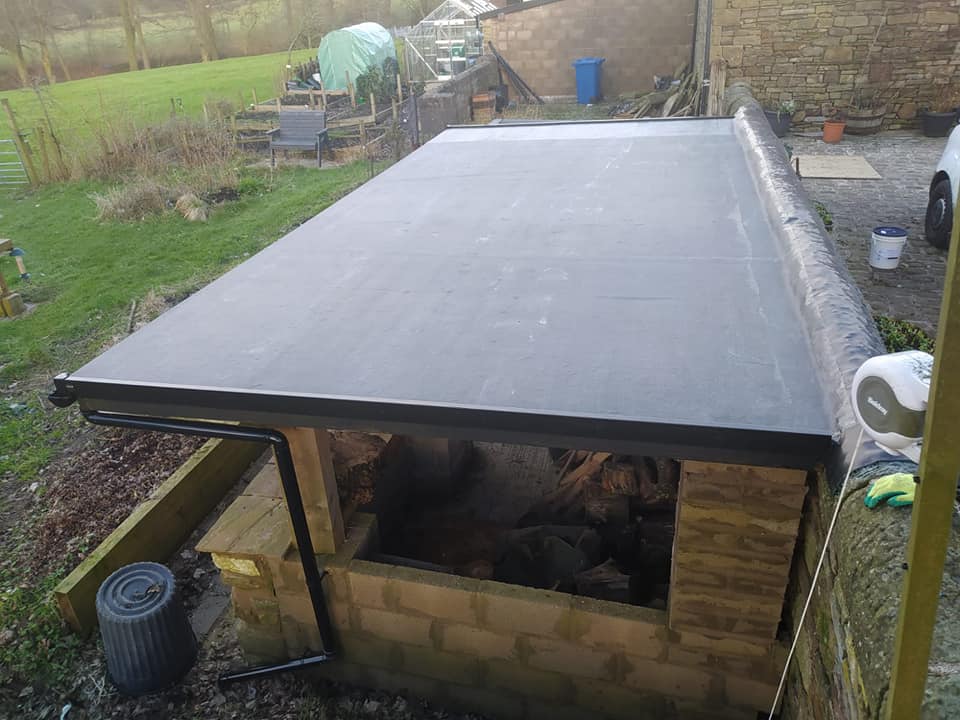
Our assessment
How we inspect a GRP roof
We check the surface from safe positions for cracks, lifting, blisters and areas where the laminate has worn. We look closely at the edges, upstands and outlets, which are the most common places for failure. Where the roof is accessible, we also check the fixings of any edge trims.
Because a smooth surface can hide problems beneath, we ask about past leaks and previous repairs. Our report explains whether the surface can be repaired locally or whether a wider overlay or replacement is more suitable. We do not recommend work for which we have not seen evidence.
The process
How a GRP roof is installed or renewed
A GRP system is only as good as its preparation. The steps below describe a typical new installation.
-
Deck inspection
The timber or board deck is checked for soundness and dryness. Any damage is repaired before the system goes down, because the laminate will not hide a weak base.
-
Priming and falls
The surface is cleaned and primed, and any required falls are formed so that water runs to the outlets. Upstands and edges are fitted with suitable profiles.
-
Laying the laminate
Resin is applied in stages with reinforcing glass fibre. Each layer is allowed to cure before the next is added, so the laminate builds to the specified thickness.
-
Finishing
A top coat is applied for weather resistance. Edges, corners and junctions are finished neatly and checked for continuity.
-
Inspection and handover
The completed roof is inspected for pinholes, thin areas and finish quality. We explain the maintenance needs and provide written information about the system.
Survey
Thinking about a GRP roof?
We can look at your flat or low-pitched roof, explain whether GRP is suitable, and set out the options in writing. We will also tell you if another system may suit the roof better.
Maintenance
Keeping a GRP surface in good order
Good maintenance costs less than unplanned repairs. Ask us to advise on any of these points.
- Keep outlets and gutters clear of leaves and debris
- Check the edges and upstands from ground level for lifting or gaps
- Report ponding water so that the fall can be reviewed
- Keep overhanging branches trimmed back from the roof surface
- Avoid placing heavy objects or equipment on the surface without advice
- Arrange a professional inspection after storms or any heavy impact
What affects the life of a GRP roof
Several factors decide how long a GRP roof gives good service. The first is the deck. A deck that moves, holds moisture or has begun to rot will eventually stress the laminate above it. The second is the detailing. Upstands, outlets and the junctions with walls are where the laminate meets another material, and small differences in movement can open a gap. The third is maintenance, particularly keeping outlets clear so that water does not stand on the surface for long periods.
Exposure matters as well. A roof that receives strong sun and wide temperature swings may show surface wear sooner than a sheltered roof, and overhanging trees can drop leaves, sap and grit onto the surface. We take these conditions into account during the survey, and we explain how they affect the advice we give on repair, overlay or replacement.
Related
Related flat roof systems
Questions
GRP roof questions
These are the questions we are asked most often about GRP roofs.
Is GRP the same as fibreglass?
They belong to the same category. GRP is the technical term for glass-reinforced polyester, and fibreglass is the everyday name for a similar glass-reinforced laminate. Our fibreglass roofs page covers the homeowner decisions for garages, porches and bays.
Can a GRP roof be repaired or only replaced?
Many faults can be repaired locally, such as a crack or a lifted edge, provided the deck is sound. Where the surface has widespread damage or the deck is failing, a wider overlay or full replacement may be better. We explain the difference after the survey.
How long will a GRP roof last?
A well-installed GRP roof can give many years of service, but its life depends on the quality of the deck, the detailing and the maintenance. We cannot give a fixed lifespan for any roof.
Can I walk on my GRP roof?
Please do not walk on the roof for everyday purposes, because it can damage the surface and is unsafe. Any access should be arranged by a professional, and we will advise on suitable routes and protection for maintenance.
Does a GRP roof come with a guarantee?
Guarantee terms vary by project. Ask us to explain what would be covered and what would not, and we will confirm the details in writing before you commit.
Where we work
Roofers serving five regional areas
We work across five regional areas: North London, North West London, West London, Hertfordshire, Buckinghamshire. Not sure if we cover your street? Call us on 01632 960123, or see all areas we cover.
Next step
Discuss your flat roof options
A short conversation can clarify whether GRP suits your roof. Reach us through the contact page to arrange a survey.